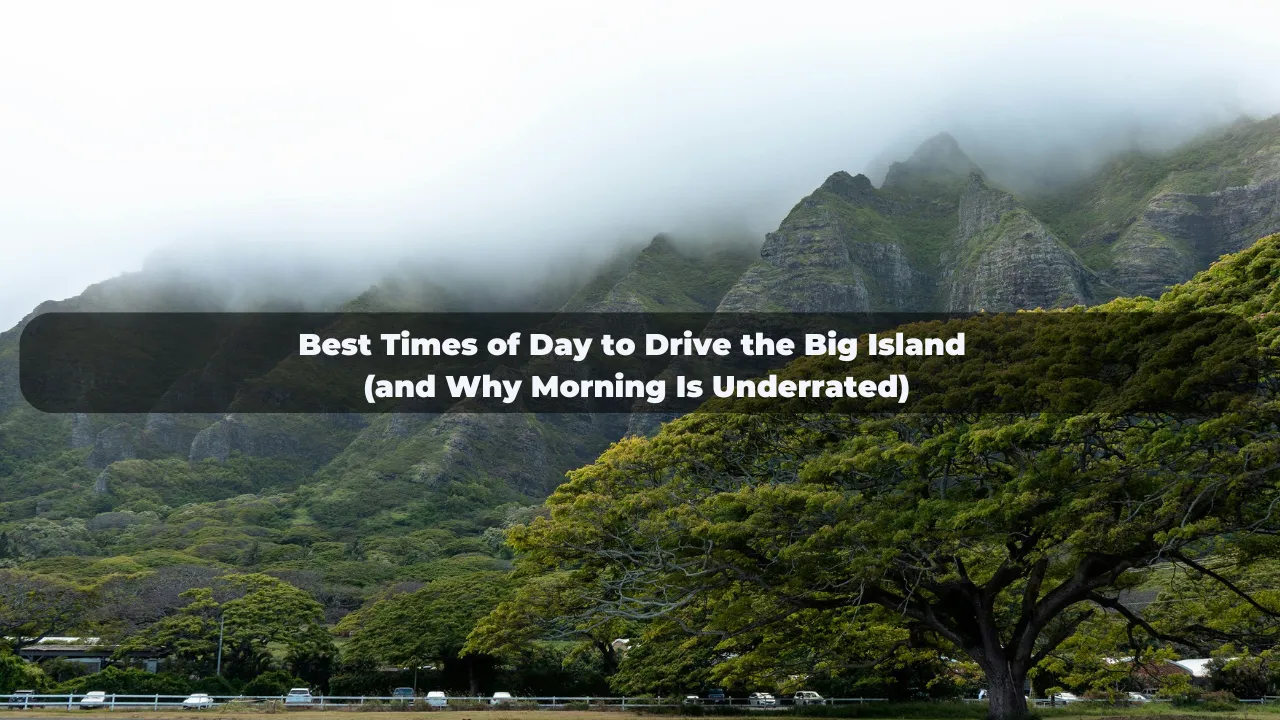
Best Times of Day to Drive the Big Island (and Why Morning Is Underrated)
Sure, Hawai‘i sunsets are legendary, but if you’re planning a full day of exploring by Jeep or SUV, you might want to reconsider what time you hit the road.
Morning hours, especially on the Big Island, offer unique advantages that most visitors don’t think about until it’s too late.
Whether you’re circling the island, heading up to Mauna Kea, or just beach-hopping along the coast, the timing of your drive can make a big difference in traffic, lighting, and overall experience.
Early Morning (6 AM to 9 AM): The Local Favorite
This is hands down the best time to start your day, especially if you’re planning a long drive or want to beat the crowds. The roads are quieter, the air is cool, and the light is soft and golden. It’s the perfect time for stunning photos.
Why mornings are a smart choice:
- Less traffic, even around busy areas like Kona and Hilo
- Cooler temperatures, especially helpful for volcano hikes or saddle road crossings
- Better parking at popular spots like beach parks, waterfalls, and lookouts
- More wildlife activity, especially birds and marine life along the coast
- Low sun angle gives you gorgeous lighting for landscapes and Jeep photos
Locals often run errands, surf, hike, or commute early. Visitors tend to sleep in, which gives you a quiet window to enjoy top spots before they get crowded.
If you’re doing a full-circle drive around the island, starting early gives you more flexibility to stop and explore without running out of daylight.
Midday (10 AM to 2 PM): The Bright and Busy Stretch
This is when the roads start getting busier, especially around tourist hubs like Kona, Hilo, and Volcano. The sun is directly overhead, which can make driving feel hotter and photos look a little washed out.
Things to keep in mind:
- Strong sun means higher risk of heat exhaustion, especially if you’re hiking
- Traffic picks up in town centers and around lunch spots
- More tour buses and vans on the road
- Beach parking starts to disappear quickly
- Visibility is still good, but harsh shadows make photography trickier
If you’re out during this time, use it for slower scenic drives like the Hamakua Coast or plan a break at a shaded park or local restaurant.
Late Afternoon (3 PM to 5:30 PM): Golden Hour Glow
This is a beautiful time to drive, especially on the west side of the island. As the sun starts to drop, the lighting softens and the temps cool off. It’s perfect for rolling down the windows and taking it slow.
Best routes at this time:
- Kohala Mountain Road for golden pastures and sweeping ocean views
- South Kona coastline for lava cliffs and sunset potential
- Chain of Craters Road if you’re wrapping up a Volcanoes National Park visit
The downside? Everyone else is thinking the same thing. Expect heavier traffic in popular sunset areas and beach lots filling up fast.
Evening and Night (6 PM and later): Beautiful but Risky
Driving at night in Hawai‘i can be peaceful and star-filled, but it also comes with a few challenges. The Big Island has long stretches of rural highway with no street lights, unpredictable weather, and limited visibility.
Night driving tips:
- Avoid Saddle Road or Mauna Kea Access after dark unless you’re experienced
- Watch for wildlife, especially goats, pigs, and birds
- Bring a fully charged flashlight or headlamp if you’re stopping for stargazing
- Double check your GPS ahead of time because service can drop unexpectedly
If you’re planning to drive at night, stay on main highways and keep your route simple. Stargazing near Saddle Road is amazing, but make sure you’re parked safely and have a way to find your way back.
Timing Tips Based on Activity
Not sure what time to go based on what you’re doing?
Here’s a quick cheat sheet:
- Full island loop – Start by 7 AM
- Mauna Kea or Saddle Road – Early morning is best for clear skies and less wind
- Beach day – Arrive before 9 AM for parking and calm water
- Volcanoes National Park – Mid-morning to late afternoon is ideal
- Waterfall stops (like Akaka Falls) – Go early to beat the crowds
- Sunset watching – Arrive at your chosen spot by 5:30 PM
Final Thoughts on the Best Times to Drive the Island
The time you start your engine can totally change your experience of the Big Island. Early mornings are cooler, quieter. The road is open, giving you a better chance at peaceful views, less stress, and smoother travel. Midday brings the heat and the crowds. Late afternoon gives you golden light, and nighttime can be rewarding if you’re prepared.
If you want to feel like you have the island to yourself, morning is your best bet. Pack your coffee, fuel up the Jeep, and enjoy the roads before everyone else gets moving.