How to Handle Fog, Rain, or Low Visibility While Driving in Hawaii
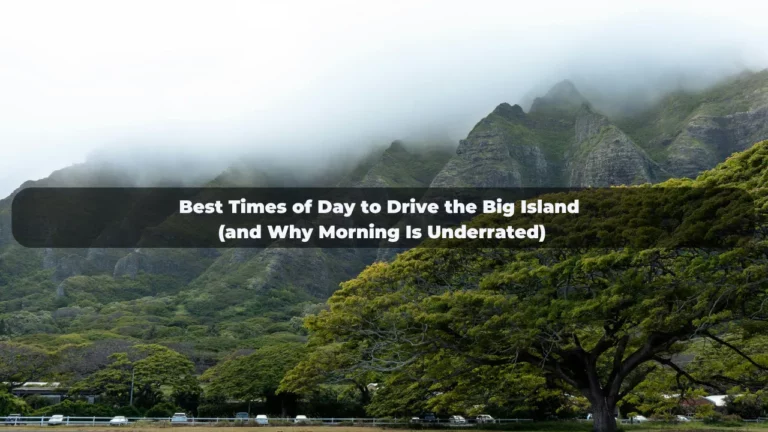
The Big Island’s beauty comes with some unpredictable weather. Between its high elevations, rainforests, and open coastlines, it’s common to hit sudden patches of fog, rain, or even both at once. It’s not just a visibility issue. Wet roads, sharp turns, and fast-changing conditions can catch drivers off guard, especially if you’re unfamiliar with the terrain.
But don’t worry. You don’t need to cancel your adventure when the clouds roll in. With a few smart moves and a little preparation, you can handle whatever weather the island throws at you
Where Low Visibility Is Most Common on the Big Island
Before we get into tips, it helps to know where you’re most likely to run into fog or rain. These areas are beautiful, but they’re also where drivers need to stay alert.
- Saddle Road (Daniel K. Inouye Highway): Foggy, especially at high elevations or in the late afternoon
- Waimea and Kohala Mountains: Cloud cover rolls in quickly and can reduce visibility in minutes
- Volcano Area: Rain is common year-round, with fog in the early morning or after dark
- Hāmākua Coast: Lush and often rainy, especially between Honoka‘a and Hilo
- Mauna Kea Access Road: High altitude = cloud level. You’re literally driving through the sky
Tips for Driving in Fog
Fog on the Big Island can change from light mist to dense cloud cover fast.
Here’s how to handle it:
- Use low-beam headlights, not high beams. High beams reflect off the fog and make it harder to see
- Slow down even when there’s no one around. Fog can hide turns, animals, or stalled vehicles.
- Increase following distance. Give yourself more time to react to cars ahead.
- Stay in your lane. Use road reflectors and the white line as your visual guide.
- Don’t stop in the road. If you need to pull over, find a safe spot well off the shoulder and turn on your hazard lights.
If visibility drops to just a few feet, it’s okay to pull over and wait it out. Fog often clears within minutes as you descend or change elevation.
Tips for Driving in Rain
Hawaiian rain isn’t always a light sprinkle. You might drive into a passing shower or a full-on downpour. Roads can get slick fast, especially where there’s moss, mud, or older pavement.
- Turn on your headlights. It helps other drivers see you even during the day.
- Watch for puddles and small flooding. Avoid driving through standing water unless you’re sure how deep it is.
- Slow your speed gradually. Slamming your brakes on wet roads can cause sliding.
- Use wipers and defoggers early. Don’t wait until visibility is gone, prep ahead.
- Avoid using cruise control. You want full control of your vehicle in wet conditions.
Extra caution is needed on rural roads, where storm drains might not be as effective, and runoff can wash gravel or debris onto the pavement.
General Tips for Low Visibility Driving
Sometimes it’s not just fog or rain to contend with. Clouds at twilight, dim light at dawn, or a combination of weather conditions can challenge the most seasoned driver.
Here’s how to drive smarter when you can’t see clearly:
- Keep your windshield clean. Use washer fluid regularly and wipe down inside glass before driving.
- Use your mirrors often. Visibility may be worse behind you than in front.
- Dim your dashboard lights. Bright interior lights can make it harder to see outside at night or in fog.
- Avoid distractions. Stay off your phone and keep the music low when conditions get tough.
- Know when to wait. It’s okay to pause your drive at a scenic pullout or safe parking lot if weather gets sketchy.
What to Pack in Your Jeep or SUV
Bad weather doesn’t have to ruin your trip if you’re ready for it.
Keep these in your vehicle just in case:
- Small towel or cloth for wiping windows and mirrors
- Headlamp or flashlight
- Compact umbrella or rain jacket
- Microfiber cloth for camera lenses or glasses
- Power bank (in case your phone dies while using GPS)
- Emergency contact info or map in case of lost signal
- Extra bottle of water and a snack
If you plan to explore higher elevation areas like Mauna Kea or Volcanoes National Park, bring a hoodie or light jacket. It gets cold quickly when the clouds move in.
What to Do If You Feel Unsafe Driving
Sometimes the smartest thing is to pull over. Whether it’s fog, heavy rain, or low light making you nervous, don’t push through if you don’t feel comfortable.
Look for:
- Scenic pullouts
- Visitor centers
- Gas stations or rest areas
Put on your hazard lights, park safely, and take a breather. Hawai‘i isn’t going anywhere. Let the weather pass, then continue when you’re ready.
Final Thoughts on Handling Fog, Rain, and Low Visibility
Weather on the Big Island changes quickly, especially if you’re moving between elevations or coasts. But a little preparation, a calm mindset, and a few good habits can keep you safe and confident behind the wheel.
Don’t rush. Don’t panic. Trust your instincts and drive like a local with patience, awareness, and a good grip on the road ahead.